
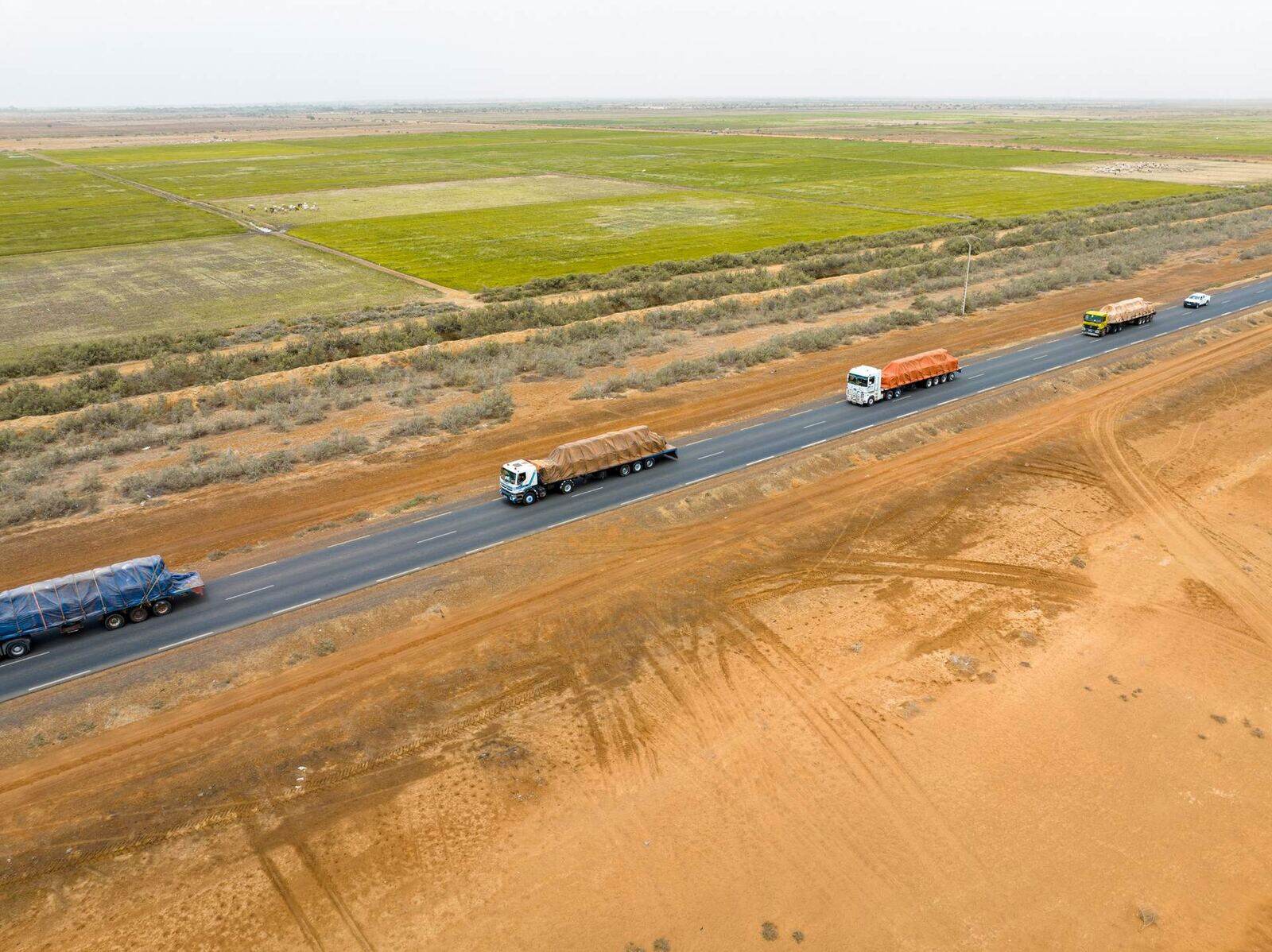
I have spent the last four years moving freight across West Africa. In that time I have heard a lot of predictions about the future of logistics: autonomous trucks, drone deliveries, robotic warehouses. Maybe all of that comes eventually. But when I look at how a shipment actually gets moved from Dakar to Bamako today, the truck is not the problem. The truck is fine. What breaks is everything around the truck.
Here is what a single shipment really looks like. A customer sends a request, often by email or WhatsApp. Someone on the ops team starts calling transporters. A dispatcher negotiates. A driver gets his instructions in a voice note. Someone checks whether the insurance certificate is still valid, if they remember to. The customer calls twice for updates. The proof of delivery arrives as a blurry photo. Finance chases that photo for a week before they can invoice. And the transporter, who did the actual work, waits to get paid.
None of these steps is hard. What is hard is coordinating all of them, across different people, companies, tools and borders, thousands of times. That coordination is the hidden operating system of African logistics. And right now, it runs on people remembering what has to happen next.
People have become the operating system
The strange thing is that logistics companies here are not short on technology. Most of the operators I know have GPS tracking, accounting software, spreadsheets, shared folders and a dozen WhatsApp groups. The problem is that each tool holds one piece of the truth. The request lives in an email. Truck availability lives in the dispatcher's head. Documents sit in a folder. The driver's position is in the GPS platform. The POD is buried in a chat. Payment status is in yet another spreadsheet.
So the employee becomes the integration layer. Ops managers are doing two jobs at once: running trucks and customers, and manually shuttling information between systems that do not talk to each other. They copy data, chase documents, call drivers for things that should already be visible, and remind colleagues to invoice trips that finished days ago.
This works at ten shipments a week. It falls apart at a hundred. More trucks means more calls. More customers means more exceptions. More subcontractors means more documents floating around. At some point the answer is not hiring more coordinators. It is a better operating model.
A shipment is a chain of decisions, not a chain of records
Most logistics software is built around records. Create the shipment, assign the truck, update the status, upload the POD, issue the invoice. But that is not how the work actually feels from the inside. A shipment is a chain of decisions. Which transporter gets this load? Are the truck's documents valid? Is this delay serious enough to warn the customer? Can we invoice yet, and how much do we owe the transporter?
Every one of those decisions depends on information produced somewhere else in the operation. When the systems do not connect the decisions, people have to. This is why another dashboard does not solve anything. A dashboard tells you a truck is late. It does not tell you why, decide who needs to know, or draft the message to the customer. Visibility without action just moves the coordination burden around.
From logistics software to logistics agents
This is where AI actually becomes useful, and I mean useful in a boring, operational way, not in a demo. Traditional software waits for someone to open it. An agent can watch the operation continuously and push the process forward. It can flag an incomplete customer request and prepare the follow-up. It can check that a truck, driver and transporter are compliant before dispatch, not after. It can notice an unusual stop on a corridor it knows well. It can match a POD to the right shipment and get the invoice ready the same day the truck is unloaded.
The value is not any single agent. It is agents coordinating around the same shipment, so the operation runs as one flow instead of twenty disconnected tasks. That is where we think the industry has to go: not a chatbot bolted onto a TMS, but an operating system for the work around the truck.
This is not about replacing people
I want to be clear about this, because it is the first question every operator asks me. African logistics is a relationship business. A good dispatcher knows which transporter can handle a difficult client. A fleet manager knows that a truck which looks available on paper cannot take a particular road in the rainy season. No model replaces that judgement, and today we waste it on repetitive coordination. The best logistics companies in Africa will not be the ones that replace their teams with software. They will be the ones that give their teams better systems.
Built from the field, not adapted to it
For any of this to work here, it has to accept how logistics actually operates in our markets. Information arrives as a voice note, a photo, a phone call. Connectivity drops. Payments mix bank transfers, mobile money, advances and deductions. A single shipment can involve a shipper, a forwarder, a transporter, a subcontractor and a driver who has never met any of them. You cannot solve this reality by simply importing a workflow designed for more structured markets. Ours is designed for it, because we have lived it, shipment by shipment, across seven countries.
The inefficiencies look small one at a time: a missing document, a late invoice, a customer left waiting for an update. Multiply them across thousands of shipments and they become lost revenue, idle trucks and exhausted teams. That is the real problem worth solving.
The future of African logistics will not begin when every truck can drive itself. It will begin when the work around every truck no longer depends on someone remembering the next step.
That is what we are building at Chargel.